
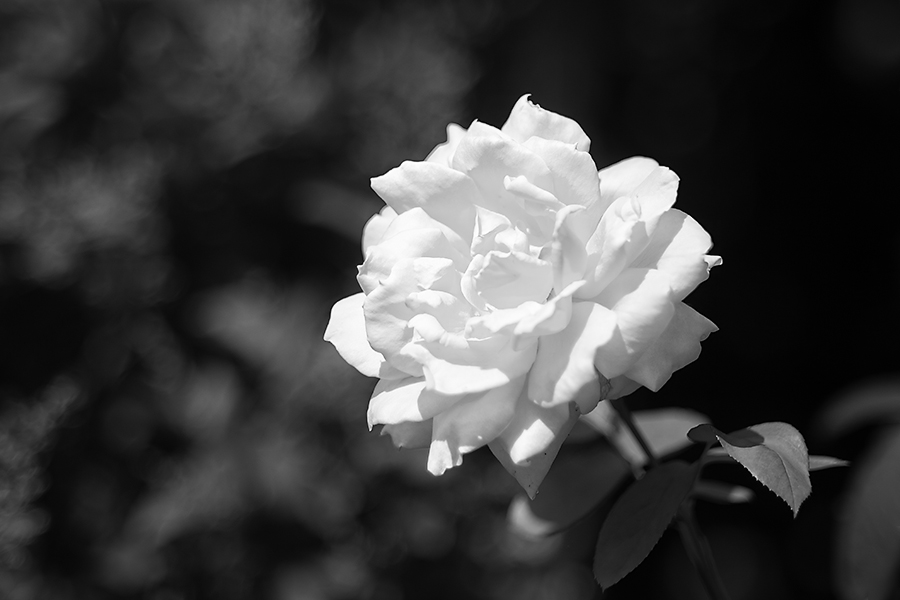
It’s getting on for nearly a year now since I started regularly using vintage prime lenses, choosing to shoot with them rather than my modern Fujifilm alternatives, mostly zooms. I don’t own a vintage zoom lens. I’m not sure why that is other than I’ve enjoyed using my new prime lens collection and just not been minded to even research vintage zooms as an option. However there is one issue that’s become apparent with these old prime lenses since I bought my full frame Sony A7 MK3 earlier year.
My initial idea for buying the Sony camera was to use it exclusively with the vintage lenses, allowing me to use them at their original focal lengths. I also really like using full frame cameras. I’d missed that experience since changing from the Canon 5D full frame cameras I had been using prior to switching to crop sensor Fujifilm cameras and lenses.

Up until purchasing the Sony A7 I’d been using my vintage lenses on a Fujifilm X-T5. The APS-C 1.5 crop sensor on that camera effectively increased the focal lengths of all the lenses I was using. So, on the X-T5, a 28mm lens became a 42mm lens, a 35mm lens became a 52mm lens etc etc.
That brings me nicely to the issue this blog was written to highlight. I found that some of the vintage lens, not all, didn’t work as well on the Sony A7 as they had on the X-T5. They were all just as sharp (or not) as they had been on the X-T5 and most rendered in the same way. The big problem was vignetting, especially when using the old lenses wide open.
Buying the Sony A7 coincided with me discovering Nikon Nikkor vintage lenses and these worked fine on the A7. I was predominately using these lenses with my new camera and everything was just tickety boo. Then, on a few recent trips away, I took some of my older lenses with me and started to notice the heavy vignetting when I was using them with the Sony A7.
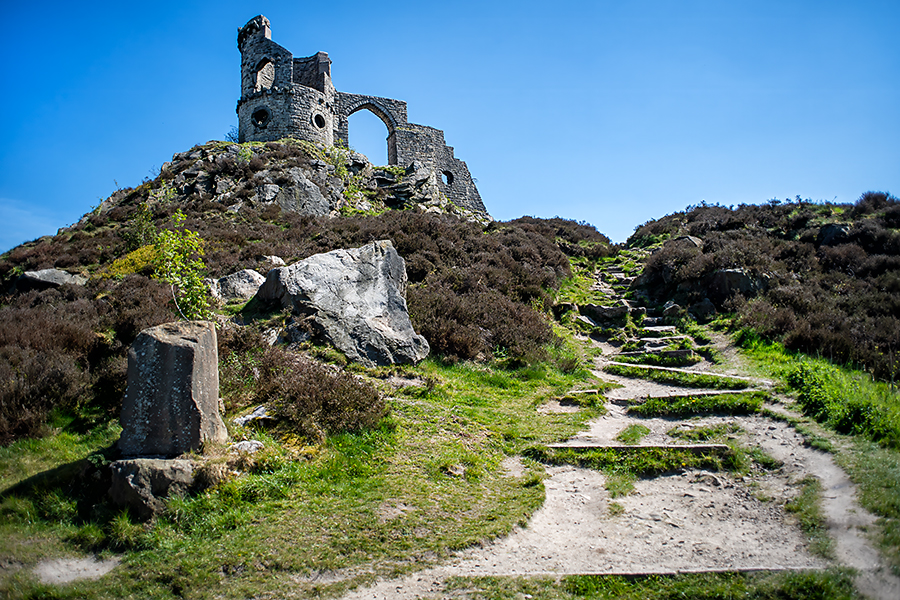
I initially thought it might be down to poor or low light levels, here in the UK. But, the problem was just as pronounced on a recent trip to Crete, where the light couldn’t have been better.
The main problem was with my favourite old lens, an Auto Takumar 35mm f2.3. This worked really well (albeit as a 50mm lens) with my X-T5 but produced really dark corners on the A7. Some of this could be corrected in Photoshop but in some situations it caused problems I couldn’t resolve. I had similar problems with my Carl Zeiss Flektogon 35mm F2.4. Another excellent lens but it really disappointed on the A7. I used it for one morning in Crete and when I checked the results, the images were so bad, I thought I must have inadvertently damaged it!

In Crete I’d tried to use the Auto Takumar 35mm for some sunset shots, all of which were disappointing. Switching lenses to a modern Sony lens instantly produced much better results. You sort of expect better from a modern lens but I’d expected this vintage lens to more than hold its own, as it always did so paired it with my X-T5.

Having done some research I’ve now discovered that this is a known issue with using some vintage lenses. The crop sensor basically deals with the vignetting problem as the dark corners are cut out of the image in camera. You could argue that I could just do the same cropping process in post process, but I don’t want to use my lenses in that way. Taking images with a big crop in mind just isn’t my way. I don’t shoot anything thinking about cropping and try to get everything the way I want in camera.
After reading the article, and from my own experience, I’ve decided that it’s just ‘horses for courses’ and if I want to use some of my older vintage lenses, it will have to be with my X-T5. I don’t want to do that as I like to use them at their original focal lengths, but getting a usable image is the most important thing.
On the plus side it may work out a lot easier keeping the lenses to separate cameras and adapters. For our next trip away I’m planning on using the A7 with just Nikon lenses and taking the X-T5 and a small selection of assorted other vintage lenses. I’ll write that up once we’re back.
All images: ©Stephen Hyde 2007-2026 – All rights reserved.
 Steve Hyde
Wonderful results from your vintage lenses. You have highlighted their unique character.
That portrait shot of your grandson is magical.
Thank you Nes 🙂
Impressive results!
Thank you Egidio 🙂
Pingback: Travel – Estepona, Spain 2026 | Steve Hyde
Pingback: Nikon Nikkor 35mm f2 AI-S | Steve Hyde